Outdoor electrical infrastructure faces relentless exposure to environmental hazards. For panel builders and automation engineers, maintaining the structural integrity of an electrical enclosure is paramount. Moisture, dust, and airborne contaminants constantly threaten delicate internal components like PLC modules, terminal blocks, and variable frequency drives (VFDs).
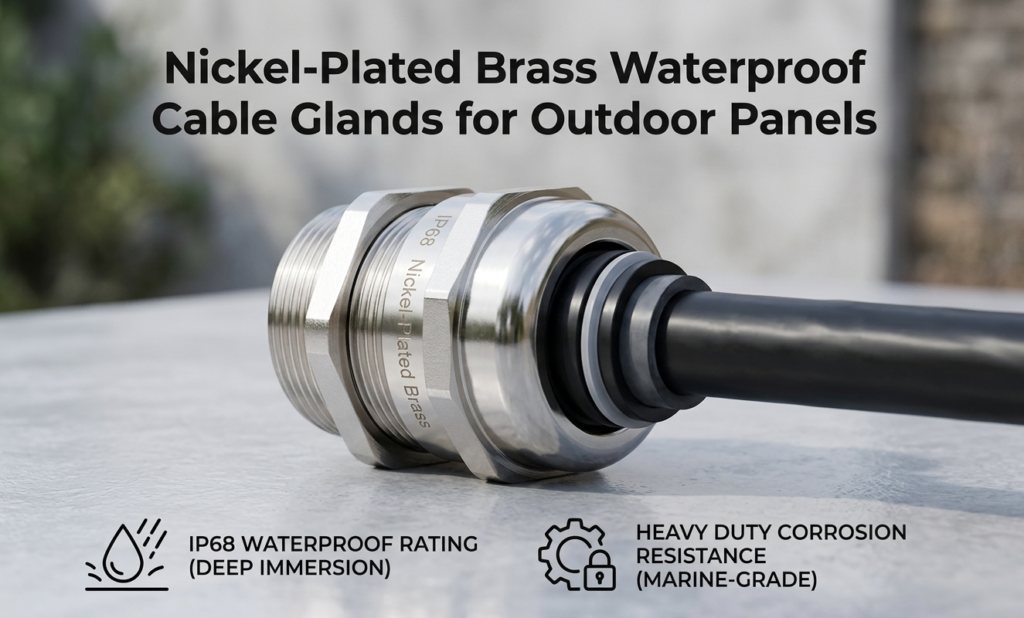
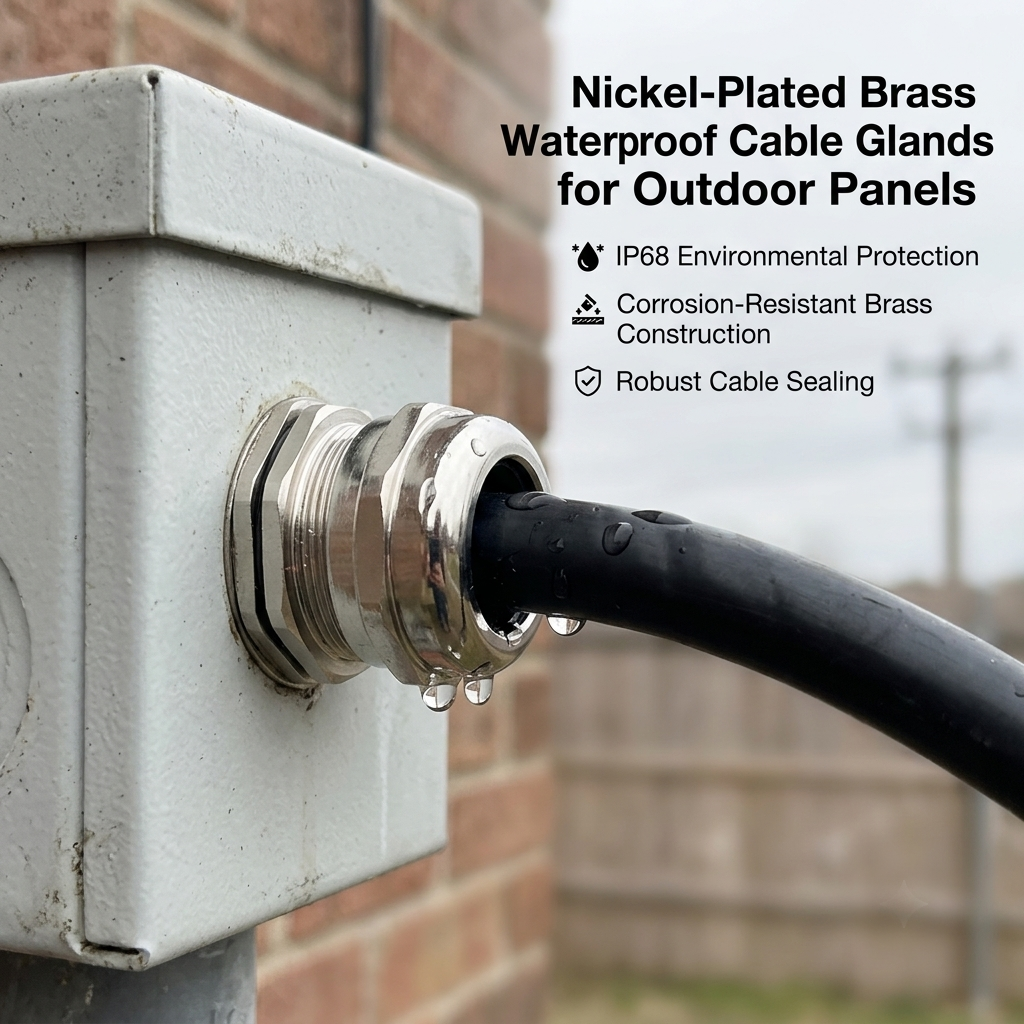
When configuring field installations, integrating high-quality Waterproof Cable Glands at every entry point is critical to preventing devastating short circuits. Standard plastic components often degrade under prolonged solar exposure, which makes Nickel-Plated Brass Cable Glands the benchmark choice for engineering long-term field reliability. This article provides a technical framework for selecting the correct heavy-duty cable management components to secure your outdoor power and control systems.
1. The Hidden Ingress Risk in Outdoor Electrical Enclosures
The cable entry point is inherently the most vulnerable zone of any industrial enclosure. When outdoor panels experience diurnal temperature shifts—heating up during peak daylight hours and cooling rapidly at night—an internal vacuum is created. This physical phenomenon, known as “thermal breathing,” actively pulls humid air and moisture through any unsealed microscopic gaps around incoming wires.
Over time, this trapped moisture condenses into water droplets directly onto sensitive electronic arrays. Without deploying specialized heavy duty cable glands for control panels, a minor rainstorm can quickly transform into a catastrophic system failure. The resulting insulation breakdown can halt entire production lines, causing extensive operational downtime and compounding replacement costs.
2. Material Breakdown: Nickel-Plated Brass vs. Plastic Glands
Selecting the right material determines the operational lifespan of your field installation. While molded nylon fittings are suitable for benign indoor environments, they rapidly fail when subjected to rugged industrial settings or outdoor weather extremes.
- UV Degradation: Nylon glands suffer from ultraviolet embrittlement within 24 to 36 months of direct sunlight exposure. This leads to micro-cracking along the locking nut threads, compromising the physical hold on the cable.
- Mechanical Integrity: Heavy-duty environments feature high vibrations, physical impacts, and structural strains. Copper-zinc alloy cores treated with a specialized surface electroplating resist structural distortion far better than any polymer alternative.
- Thermal Endurance: Industrial processing plants can experience extreme ambient temperatures. Metal alternatives maintain strict dimensional stability across a broad thermal envelope, preventing seal relaxation.
Performance Comparison Matrix
| Technical Parameter | Nickel-Plated Brass Fittings | Standard Nylon (PA66) Plastics |
| UV & Sunlight Resistance | Excellent (No structural degradation) | Poor to Moderate (Prone to embrittlement) |
| Operating Temperature Range | Continuous: -60°C to +100°C | Continuous: -40°C to +80°C |
| Mechanical Impact Strength | High IK Grade (Resists heavy impacts) | Low to Medium IK Grade (Prone to cracking) |
| Chemical & Salt Spray Resistance | Superior (Nickel barrier prevents oxidation) | Variable (Susceptible to certain industrial solvents) |
| Typical Service Lifespan | 15+ Years in outdoor environments | 3 to 5 Years in outdoor environments |
3. What Does a True IP68 Rating Mean for Waterproof Cable Joints?
In industrial procurement, many components carry a generic “waterproof” label, but outdoor automation setups demand verified compliance with international standards like IP68. The Ingress Protection (IP) rating system defines exactly how well an enclosure accessory seals against solids and liquids.
The first digit, 6, indicates that the component is completely dust-tight, preventing even microscopic particulate matter from entering the housing. The second digit, 8, certifies protection against continuous submersion in water under specific pressure conditions.
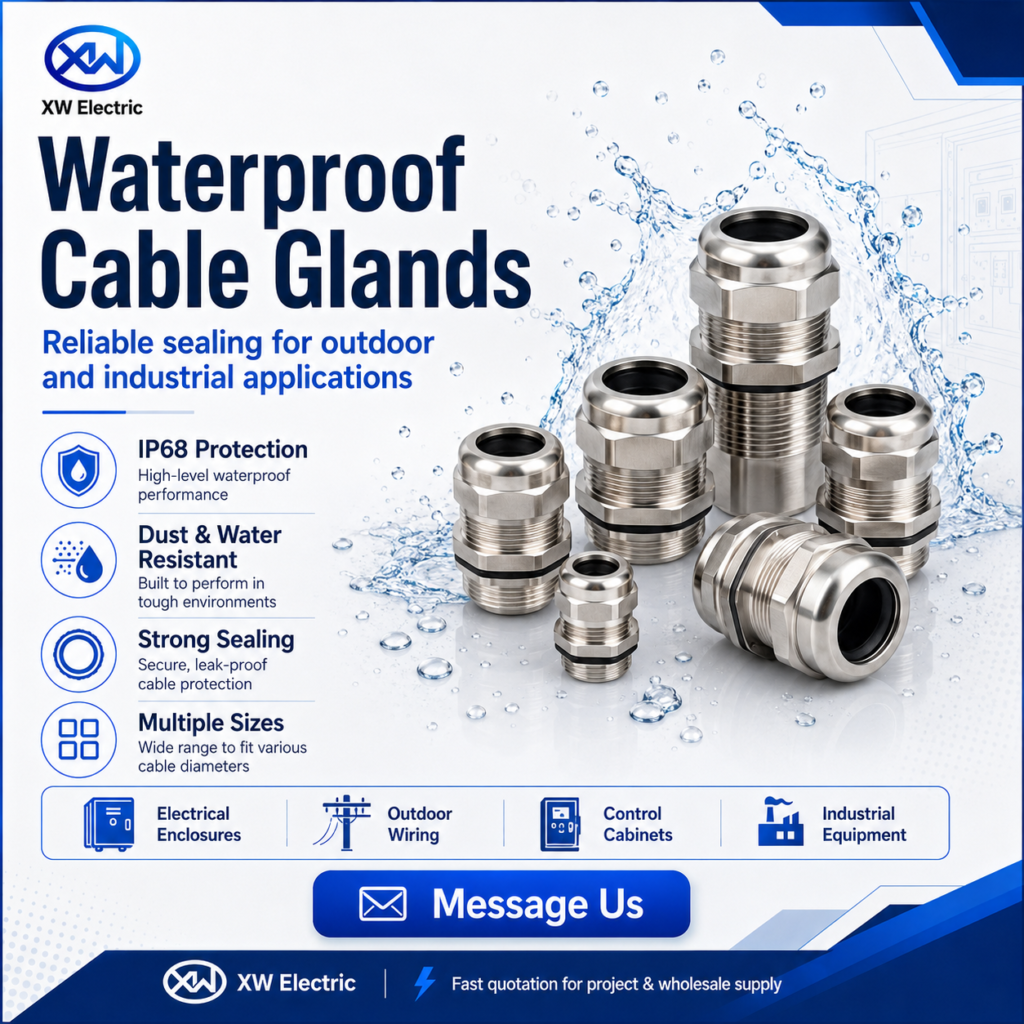
Achieving this standard requires an internal sealing mechanism that compresses uniformly around the cable jacket. When installing a precision-engineered IP68 waterproof brass cable gland, the high-tolerance internal claw mechanically compresses a vulcanized NBR or silicone rubber seal. This creates a continuous, 360-degree gas-tight barrier that successfully blocks high-pressure rain, heavy washdowns, and creeping humidity.
4. Engineering Selection: Sizing and Thread Standards
Improper component selection is a leading cause of field failures. Engineers must carefully match both the external enclosure threading and the internal cable dimensions to ensure optimal sealing performance.
Thread Standards: Metric vs. NPT vs. G (BSPP)
Different geographical regions and industries utilize distinct thread architectures for machinery entries:
- Metric Threads (M): Designed with a straight profile according to ISO standards. They rely on an integrated O-ring compressed against the flat face of the enclosure wall to achieve a waterproof seal.
- NPT Threads: Tapered threads predominant in North American industrial systems. They seal via a metal-to-metal wedging effect along the thread flanks, though thread sealant is still recommended for wet locations.
- G Threads (BSPP): Parallel pipe threads common in European machinery, which also require an interface washer or O-ring for proper moisture exclusion.
Aligning Cable Diameters with Clamping Ranges
A cable gland can only maintain its IP68 rating if the outer diameter (OD) of the cable falls squarely within the specified clamping range of the internal rubber insert. Selecting a gland that is too large prevents the sealing ring from compressing tightly enough around the jacket. Conversely, forcing an oversized cable through a small gland deforms the internal seal, creating a clear pathway for moisture ingress.
5. Supply Chain Safety: Ensuring RoHS and REACH Compliance
For international projects and original equipment manufacturers (OEMs), product safety goes beyond physical performance. Environmental compliance is an essential requirement for entering premium global markets like the European Union.
Raw industrial brass naturally contains trace amounts of lead to improve machinability during high-speed CNC turning operations. However, strict environmental regulations like RoHS and REACH restrict heavy metals and hazardous chemical plasticizers in industrial hardware.
If an automated control panel is exported with non-compliant underlying hardware, it risks being rejected during customs clearance or failing corporate environmental audits. Partnering with a verified nickel-plated brass cable gland manufacturer ensures that all raw metal stock, internal nylon clamping claws, and elastomeric O-rings undergo rigorous chemical screening. This step mitigates regulatory risks and safeguards your broader B2B supply chain.
Conclusion
Securing an outdoor control panel requires focusing on the smallest points of entry. Investing in heavy-duty brass waterproof cable joints eliminates the systemic risks associated with UV breakdown, thermal contraction, and water ingress. By matching precise thread standards, selecting verified IP68 sealing configurations, and insisting on RoHS and REACH compliance, engineering teams can guarantee decades of uninterrupted field performance for their automation assets.
Frequently Asked Questions (FAQ)
What is the primary advantage of nickel plating on brass cable glands?
Nickel plating provides a robust sacrificial barrier that prevents the underlying brass core from oxidizing and tarnishing. This treatment significantly enhances the component’s resistance to coastal salt spray, industrial acids, and galvanic corrosion when mounted on stainless steel or aluminum enclosures.
Can an IP68 waterproof cable gland be used in Zone 1 explosion-hazardous areas?
Standard IP68 waterproof glands are designed exclusively for environmental sealing against dust and moisture. For hazardous locations like Zone 1 or Zone 2 chemical plants, you must specify dual-certified components that carry explicit Ex d (flameproof) or Ex e (increased safety) markings alongside their waterproof ratings.
How do I choose between Metric and NPT threads for my control panel?
Your selection must match the pre-existing threaded openings of your enclosure or machinery. European and global automation hardware typically standardizes on Metric straight threads, whereas North American infrastructure and heavy process piping systems predominantly utilize tapered NPT entries.
Are metal waterproof cable joints reusable after field maintenance?
Yes, high-quality metallic glands are engineered for repeated installation and disassembly. Unlike plastic fittings that warp or cross-thread under high torque, brass components can be unscrewed and re-torqued multiple times during routine wire upgrades without losing their structural or sealing capabilities.
Technical Selection Support
Are you currently finalizing engineering blueprints for an upcoming outdoor power distribution or automation network? Xingwei Electrical manufactures a comprehensive range of high-tolerance, industrially certified cable management solutions designed for extreme environments. Contact our technical support desk today to review your sizing specifications, download precise 2D/3D CAD models, or request free engineering samples for your next panel assembly run.