In modern automated manufacturing and industrial assembly lines, electrical cables function as the vital nervous system of machinery. While engineers dedicate significant resources to calculating voltage drops and signal shielding, the mechanical vulnerabilities at the physical cable entry points are frequently overlooked. In dynamic setups where machinery experiences continuous movement, repetitive bending, or high vibrations, a standard fitting cannot adequately handle the stress. Without proper mitigation, these termination zones become the primary failure points in an automated system.
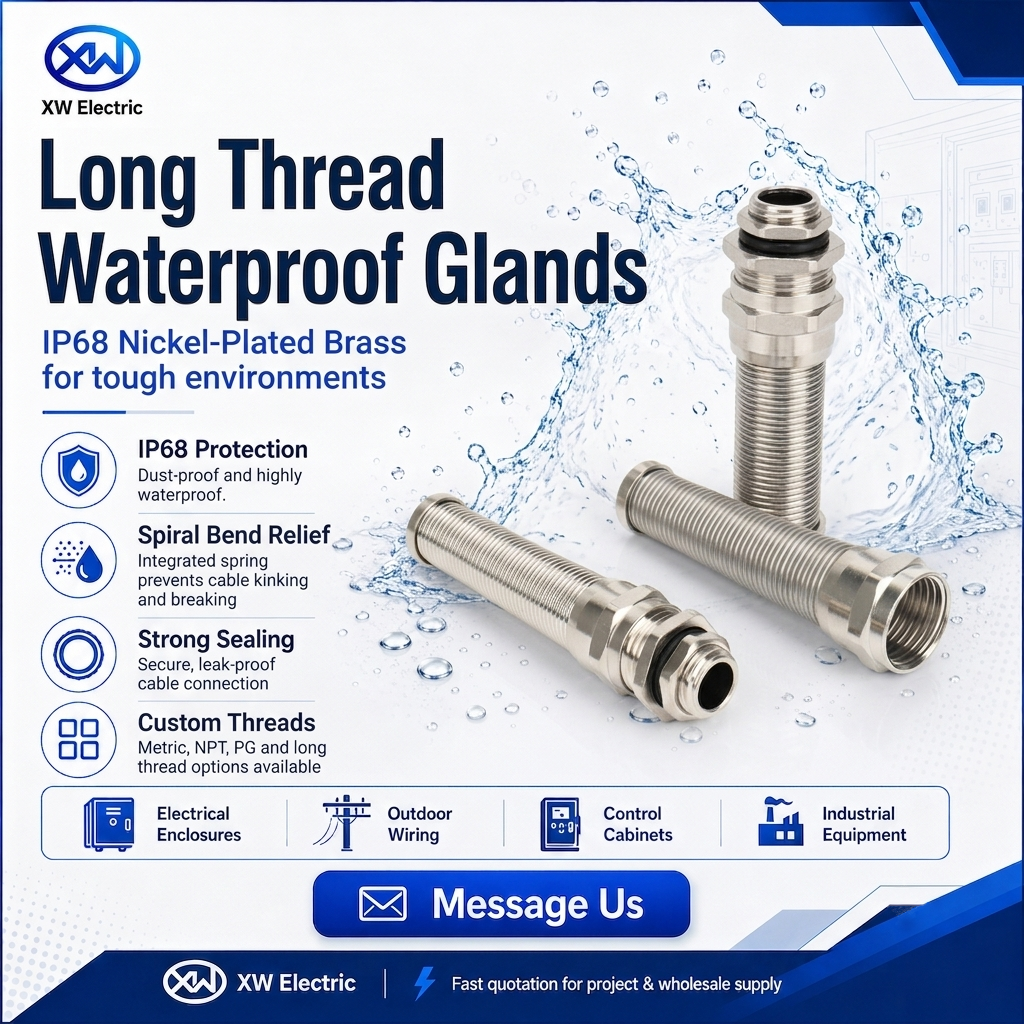
When a standard connector is subjected to constant motion, the localized stress at the enclosure junction concentrates right at the cable root. Over time, this localized stress triggers a phenomenon known as cable fatigue failure, causing the outer insulation jackets to crack and the internal copper conductors to snap. Selecting a nickel-plated brass flex protecting cable gland addresses this specific operational vulnerability. By incorporating an integrated metal spiral guard, these specialized components distribute bending stress gradually, ensuring maximum electrical reliability and preventing unexpected system downtime.
The Mechanics of Cable Fatigue Failure at Entry Points
To effectively eliminate electrical failures in moving machinery, it is essential to analyze the forces acting on a cable as it enters a rigid junction box or control cabinet. When an automated component—such as a robotic articulated arm or a traveling gantry—moves, the attached power or data cable undergoes frequent cyclic bending.
If the cable passes through a standard compression fitting, the entry point acts as a sharp fulcrum. The bending radius at this junction drops significantly below the manufacturer’s recommended dynamic limit. This tight bending creates severe tension on the outer curve of the cable jacket and compression on the inner curve. Over thousands of operational cycles, this mechanical stress leads to several distinct degradation phases:
- Insulation Creep and Cracking: The continuous flexing causes the outer polymer sheath (often PVC or PUR) to lose its elasticity, leading to deep microscopic fissures.
- Particulate Ingress: Once the outer jacket cracks, ambient dust and atmospheric moisture penetrate the inner layers of the cable assembly.
- Internal Core Disruption: The copper strands within the conductors undergo work-hardening due to the concentrated bending stress, eventually snapping one by one.
This structural degradation directly impacts operational efficiency. A single broken conductor core can cause intermittent signal loss, confusing PLC modules and triggering sudden safety shut-offs. In high-humidity or dust-heavy industrial sites, a compromised cable jacket allows moisture to travel up the conduit via capillary action. This moisture eventually reaches the interior of the enclosure, short-circuiting expensive variable frequency drives (VFDs) and critical control components. Preventative mechanical strain relief is not simply an optional feature; it is a baseline engineering requirement for maintaining operational uptime.
What is a Flex Protecting Cable Gland?
A flex protecting cable gland is an advanced termination component engineered to counteract the forces that cause structural cable fatigue. Unlike standard industrial fittings that simply grip the cable at a fixed point, these specialized variations extend the mechanical support outward, guiding the cable into a gentle, managed arc during movement.
The Anatomy of a Spring Guard
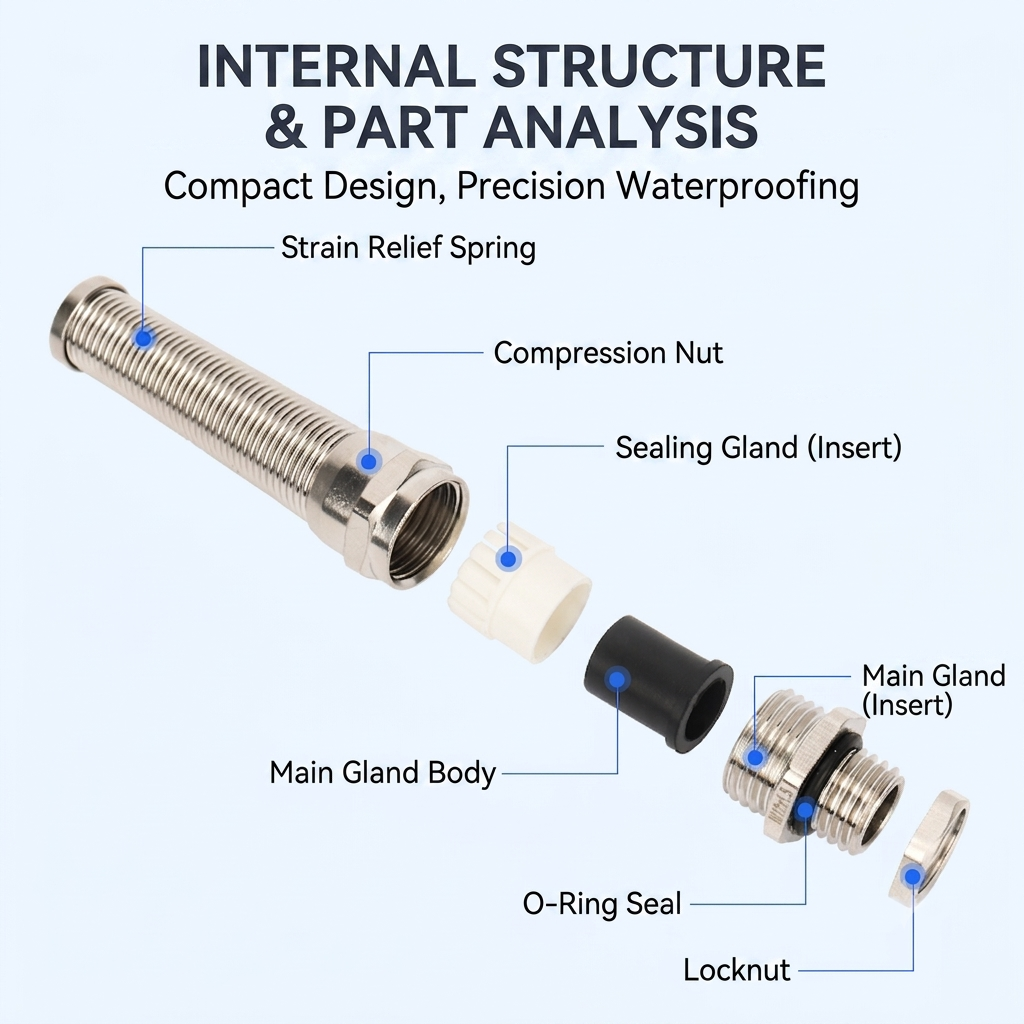
The superior performance of a premium flex protection gland lies in its multi-part construction. The assembly replaces the standard dome nut with an elongated, precision-machined spiral support or heavy-duty stainless steel spring guard. This spring extension acts as an external skeleton for the cable.
As the connected machinery moves, the spiral profile provides a progressive resistance gradient. The root of the spring nearest to the gland body remains highly rigid, preventing sharp bends at the enclosure port. Meanwhile, the outer tip of the spring remains highly flexible. This smart gradient forces the cable to maintain a safe, sweeping bending radius, effectively transferring the destructive kinetic energy away from the critical sealing zone.
Why Nickel-Plated Brass Outperforms Nylon in Heavy Industry
When specifying strain relief components, procurement managers frequently choose between synthetic nylon variants and metallic options. While plastic spiral glands are lightweight and cost-effective for basic commercial appliances, they lack the structural durability required for demanding industrial applications.
| Technical Parameter | Nickel-Plated Brass (Spring Guard) | Standard Industrial Nylon (Plastic) |
| Mechanical Impact Resistance | Superior (Resists heavy crushing loads) | Low (Prone to cracking under sudden impact) |
| Environmental Aging Resistance | Immune to UV rays and ozone exposure | Degrades, becomes brittle under constant sunlight |
| Thermal Operating Stability | -40°C to +100°C(Maintains torque strength) | -20°C to +60°C(Creeps or softens at high temps) |
| Fatigue Life of Tension Spring | Infinite mechanical cycles (Stainless steel/Brass) | Limited flex cycles before plastic deformation |
| Chemical & Hydrocarbon Resilience | Highly resistant to lubricants, oils, and fuels | Vulnerable to specific industrial solvents |
Synthetic nylon components suffer from material creep under continuous high-torque tension. Over time, the plastic threads loosen due to structural vibrations, compromising the watertight seal. Furthermore, in harsh outdoor settings, constant UV exposure breaks down the chemical bonds of nylon, making the spiral protection brittle and prone to snapping during cold seasonal shifts.
Choosing a nickel-plated brass housing paired with a stainless steel spring provides an enduring mechanical solution. The electroplated nickel layer forms a tough barrier against environmental oxidation, while the underlying brass housing maintains absolute thread integrity. This configuration ensures the component will not distort, loosen, or crack under extreme mechanical stress.
Key Selection Criteria: Sizing, Threads, and Environmental Ratings
Achieving an absolute, zero-tolerance seal requires precise technical alignment between the cable dimensions, the enclosure specifications, and the environmental ratings of the gland. Selecting components based on visual approximation can result in loose installations, compromised safety compliance, and eventual moisture ingress.
Navigating Metric (M) and NPT Thread Configurations
Global automation frameworks utilize distinct thread profiles based on regional engineering history and equipment origin. Utilizing the incorrect thread standard or trying to force mismatched profiles together will damage the enclosure ports and strip the gland threads.
- Metric Threads (M Series): Defined by ISO standards, Metric threads utilize a straight, parallel profile measured by outer diameter and pitch (e.g., M20 × 1.5). Parallel threads rely entirely on an undercut O-ring or washer compressed against the flat enclosure surface to establish a secure, watertight seal.
- NPT Threads (National Pipe Tapered): Standardized across North American oil, gas, and heavy manufacturing installations, NPT threads feature a distinct tapered profile. The seal is created through metal-to-metal contact as the tapered threads wedge tightly together during torque application.
For verified thread profiles and precise technical layouts, reviewing an industry-compliant Standard Cable Glands Category Page helps panel builders secure zero-tolerance sealing. Manufacturers like Wenzhou Xingwei Electrical Co., Ltd. (XW Electric) offer CNC-machined Nickel-Plated Brass Cable Glands equipped with durable spring guards to match international engineering standards. Ensuring that your supplier provides precision-cut threads prevents structural looseness and eliminates the risk of thread cross-stripping during high-torque field installations.
Decoding IP68 Waterproof and Dust-Tight Defense
The ultimate validation of an industrial cable entry component is its Ingress Protection (IP) rating. For demanding applications exposed to outdoor rainfall, high humidity, or intense industrial washdowns, an IP68 certification is essential.
An authentic IP68 rating indicates that the cable gland remains entirely dust-tight and can withstand continuous submersion in water under specified hydrostatic pressures. However, the longevity of this seal depends heavily on the internal elastomeric elements. Premium flex protection glands utilize high-grade chloroprene or molded neoprene inner sealing inserts rather than cheap, recycled rubber compounds. These premium materials maintain their elasticity across extreme temperature fluctuations, preventing the seal from shrinking, cracking, or losing its compression grip on the cable jacket over decades of operation.
Industrial Applications Demanding Dynamic Cable Protection
Integrating dynamic strain relief fittings is highly critical across several major automated sectors where equipment is in constant motion:
Industrial Robotics & Articulated Arms
Modern multi-axis welding and pick-and-place robots move at high velocities, twisting and bending their internal control and power lines millions of times a year. Standard cable entry ports would quickly wear through the cable jackets. Utilizing a metallic spring-guard gland at the base and tool junctions ensures the cable paths follow a controlled, calculated curve, avoiding tight bends and protecting the inner signal lines.
Pendant Control Stations & Cranes
Overhead cranes, hoist systems, and heavy industrial machinery rely on suspended handheld pendant controllers. Operators continuously pull, twist, and drop these control cables. A flex protecting gland at the top entry point prevents the heavy cable from tearing out of the internal terminals under its own suspended weight, providing durable strain relief.
Conveyor Systems & Automated Logistics
Linear tracking systems, sorting tables, and automated packaging machinery feature cable tracks that cycle continuously back and forth. The entry boxes on these moving shuttles experience constant directional changes. A rugged nickel-plated brass spiral connector ensures the transitioning cables resist kinetic stress, preventing unexpected downtime on the production floor.
Common Pitfalls in Sourcing Industrial Strain Relief Components
When managing bulk procurement for large-scale engineering projects, B2B buyers frequently make the mistake of prioritizing initial component costs over verified tracking and manufacturing quality. Unverified, low-cost fittings often carry unauthentic certification markings. Lacking genuine CE, RoHS, or independent test reports exposes an operation to significant regulatory liability and physical equipment damage.
Another widespread issue involves the structural design of the clamping claw. Poorly engineered glands feature sharp, rigid internal plastic claws that slice directly into the cable sheath when the dome nut is tightened down. When combined with continuous machine vibrations, this flawed design creates a cutting action that shears through the cable insulation. High-quality manufacturers design their compression inserts with smooth, rounded clamping profiles. This design distributes the gripping force evenly around the entire perimeter of the cable, securing the line firmly without compromising the protective outer jacket.
Frequently Asked Questions (FAQ)
What is the primary purpose of a flex protecting cable gland?
The primary purpose is to prevent cable fatigue failure and internal wire breakage at the enclosure entry point. It accomplishes this by utilizing an extended spiral or spring guard that distributes bending stress over a wider, controlled radius during machine movement.
Can a spring guard cable gland be used in outdoor IP68 environments?
Yes, provided the gland body features high-grade neoprene seals and precision parallel threads paired with a sealing washer. The metal spring guard protects against mechanical stress, while the internal compression seals maintain an airtight, waterproof barrier against heavy rain and dust.
What is the technical difference between standard strain relief and flex protection?
Standard strain relief protects the cable against straight, axial pulling forces to prevent it from being yanked out of the internal terminals. Flex protection provides this same pull-out defense while also adding a calculated bending guide to protect the cable from cyclic lateral bending and kinking.
Why do nylon flex glands fail faster than nickel-plated brass options in heavy industry?
Nylon degrades under continuous UV radiation, becomes brittle in freezing temperatures, and suffers from material deformation under high structural vibrations. Nickel-plated brass retains its rigid structural dimensions, resists environmental corrosion, and withstands accidental heavy impacts without cracking.
Conclusion: Engineering Long-Term Uptime
Mitigating the risk of system failures requires focusing on the physical points where power and control lines connect to your equipment. In dynamic manufacturing setups and outdoor applications, standard fittings cannot protect cables from the mechanical fatigue caused by constant motion. Choosing a nickel-plated brass flex protecting cable gland provides a durable solution that combines the structural strength of a metallic housing with the smart stress distribution of an extended spring guard. This engineering configuration protects high-value PLC modules and internal circuitry from moisture ingress and short circuits, lowering maintenance costs and maximizing long-term operational uptime.
Optimizing your electrical framework requires verified compliance and perfect component integration. For custom production requests, bulk wholesale quotes, or to claim Free Product Samples for your engineering verification, contact our support team directly at cnxwelectric@gmail.com to analyze certified technical drawings and sizing sheets.