In industrial electrical engineering, a system is only as secure as its weakest entry point. While engineers spend weeks specifying high-end control panels, routing shielded cables, and calculating thermal loads, the handling of unutilized enclosure knockouts is frequently relegated to an afterthought. Leaving a pre-punched hole open, or closing it with inadequate hardware, compromises the entire electrical architecture.
When a factory layout changes or an instrument is decommissioned, empty terminal ports remain. Plugging these openings requires structural components capable of maintaining the original enclosure integrity against harsh environmental factors. Selecting precision-machined metal screw plugs solves this issue, ensuring that spare entries do not turn into hazardous failure points for your high-value internal circuitry.
The Hidden Risks of Improper Enclosure Hole Sealing
Neglecting empty punch-outs or using substandard closing methods creates severe operational vulnerabilities. Many field technicians treat vacant ports as cosmetic details, patching them with basic adhesive tape or low-grade plastic caps. This practice exposes sensitive internal automated modules to catastrophic field failures.
When an enclosure port is poorly sealed, changes in diurnal ambient temperatures cause internal air expansion and contraction. This pressure variance creates a localized vacuum, drawing in humid air through microscopic gaps around the unsealed hole. Over time, this constant capillary suction leads to moisture accumulation inside the junction box, causing micro-condensation on terminal blocks and triggering unexpected ground faults.
Furthermore, dynamic factory environments introduce heavy airborne particulates, such as conductive carbon dust, metal shavings, or corrosive chemical mists. Without proper sealing, these contaminants easily bypass weak barriers, settling directly onto active printed circuit boards. This layer of dust insulates heat-generating components and creates conductive bridges across open contacts, leading to sudden short circuits and costly production line shutdowns.
Material Selection: Metal Screw Plugs vs. Plastic Blanking Plugs
B2B procurement teams frequently face the decision of choosing between cheap synthetic nylon caps and heavy-duty metallic alternatives. While plastic variants offer a low initial purchase cost, they are physically incapable of enduring the long-term stress found in heavy-duty industrial processing environments.
Why Nylon Fails under Heavy Vibrations and UV Exposure
Synthetic nylon or plastic blanking plugs are highly susceptible to a phenomenon known as material creep. When exposed to constant machine vibrations or cyclical thermal expansions, plastic threads gradually lose their friction grip and back out of the housing port.
In outdoor installations, continuous exposure to solar ultraviolet (UV) radiation rapidly breaks down the polymer chains within plastic caps. Within months, the material undergoes severe embrittlement, turning chalky and cracking under minimal physical contact. This deterioration completely destroys any ingress defense, exposing the internal components to rain and dust.
The Structural Longevity of Brass Nickel-Plated Stop Plugs
Opting for metallic alternatives completely eliminates these material degradation risks, ensuring long-term operational safety.
| Engineering Property | Brass Nickel-Plated Stop Plugs | Standard Industrial Nylon Plugs |
| Mechanical Impact Rating | IK10 (Resists severe physical impact) | IK04 to IK06 (Cracks under tools or debris) |
| UV & Ozone Degradation | Fully Immune (Zero structural breakdown) | Severe (Becomes brittle and yellows) |
| Thread Creep & Loosening | Negligible (Maintains constant torque) | High (Softens and backs out over time) |
| Thermal Operating Envelope | -40°C to 100°C (Stable dimensional sealing) | -20°C to 60°C (Risk of thread deformation) |
| Chemical Resistance | Resists industrial lubricants and fuels | Vulnerable to specific cutting solvents |
A premium brass nickel-plated body provides robust mechanical defense against external impacts, such as dropped maintenance tools or flying debris. The specialized electroplated nickel layer forms a dense barrier that prevents brass oxidation in high-humidity or coastal salt-spray conditions. Because the metal matched-threads do not deform under stress, the component maintains tight, locked torque profiles across an expansive thermal range from -40°C to 100°C.
Demystifying Thread Configurations: Metric, NPT, and PG
Achieving an absolutely airtight seal requires perfect compatibility between the plug threads and the enclosure wall port. Using mismatched thread types strips the entry ports and ruins the ingress protection.
Matching Parallel Metric (M) Threads with Sealing O-Rings
Metric threads represent the global industrial standard, utilizing a straight, parallel profile designated by the outer diameter and pitch (such as M20 × 1.5). Because parallel threads do not taper, they do not form a seal within the thread track itself. Instead, they rely on compressing an elastomeric washer or O-ring securely against the flat outer face of the enclosure wall to block dust and liquids.
To ensure flawless interface compliance, consulting verified technical dimensions from an industrial Standard Cable Glands Category Page allows panel builders to bypass sizing errors. For high-vibration control rigs, utilizing CNC-machined Metal Screw Plugs with pre-fitted elastomers provides an instant, certified solution.
The Tapered Seal Architecture of NPT Stop Plugs
National Pipe Tapered (NPT) threads dominate North American industrial infrastructure. Unlike parallel threads, NPT configurations feature a distinct 1° 47′ tapering angle. As the plug is turned into the port, the male and female thread profiles wedge together, creating a tight metal-to-metal seal along the entire engagement length.
Engineering Secrets to Achieving a True IP68 Watertight Seal
Achieving verified IP68 ingress defense requires careful consideration of both material elasticity and correct field installation techniques.
The Role of Elastomeric O-Rings (NBR vs Neoprene)
The ultimate moisture barrier is established by the rubber seal compressed beneath the plug head. Low-tier commercial components often use cheap recycled rubber that dries out and loses its compression set within a year.
Industrial-grade threaded metal blanking plugs utilize high-density Nitrile Butadiene Rubber (NBR) or specialized Neoprene compounds. NBR provides excellent resilience against petroleum-based machine lubricants, hydraulic fluids, and cutting oils. This chemical endurance ensures the rubber remains flexible, maintaining a watertight barrier even when drenched in industrial chemical washdowns.
Optimal Torque and the Slotted Head Design
Over-tightening a blind plug is a common installation error that compromises sealing performance. Applying excessive torque deforms the elastomeric O-ring, causing it to squeeze out of its retention groove and split.
[ Correct Installation Torque ]
Slotted Head Drive ──► Linear Compression ──► Uniform O-Ring Seating ──► True IP68 Ingress Defense
Premium ip68 metallic stop plugs feature a clean, low-profile dome integrated with a precision-cut top slot. This slotted design allows field engineers to tighten the plug using a standard flat-head screwdriver or an industrial coin tool. This configuration ensures quick, uniform torque application without scratching the protective nickel plating or stripping the tool drive recess.
Industrial Applications Where Metallic Blind Plugs Are Mandatory
Using heavy-duty brass nickel plated blind plugs is vital across several high-consequence industrial sectors:
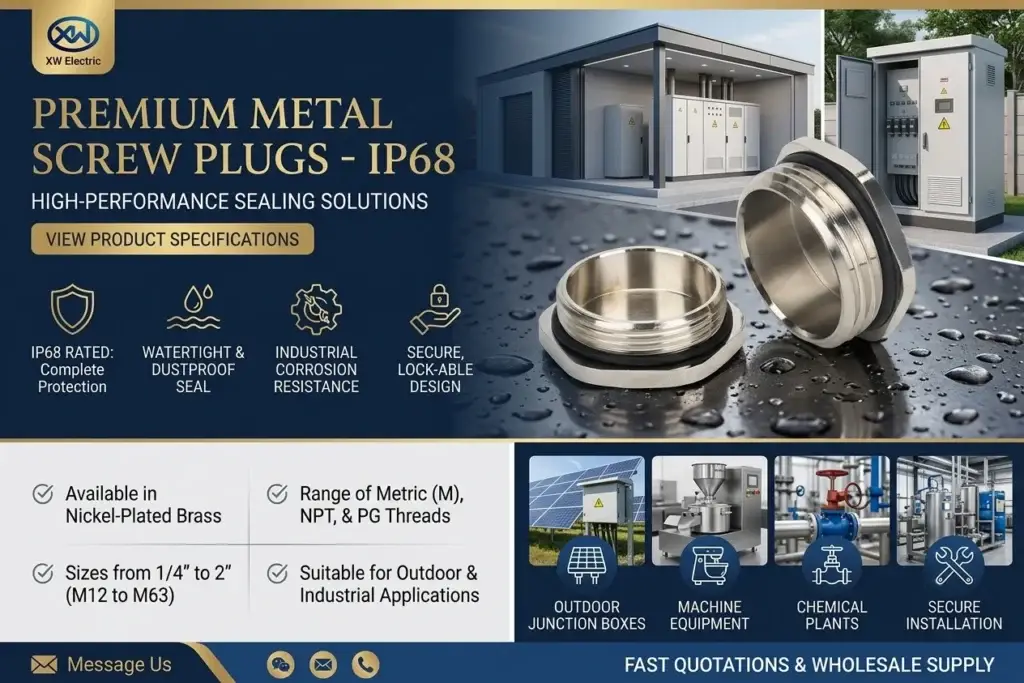
- Outdoor Power Distribution Fields: Solar inverter stations, cellular routing masts, and trackside rail control boxes face harsh weather elements. High-grade metal stop plugs prevent rainwater and windblown dust from bypassing open knockouts.
- Food & Pharmaceutical Processing Plants: Production lines must withstand regular high-pressure, high-temperature washdowns containing caustic sanitizing agents. Precision metal plugs ensure that these washdown sprays cannot penetrate the electrical enclosures housing automated PLCs.
- Heavy Marine & Port Cranes: Saltwater spray accelerates galvanic corrosion on basic hardware. Robust metallic stop plugs provide long-lasting structural sealing on terminal boxes mounted on offshore rigs and coastal cargo handling systems.
Sourcing Pitfalls: Avoiding Low-Grade Industrial Hardware
Procurement managers must look beyond surface appearances when sourcing industrial enclosure hole plugs. The market contains many low-cost lookalikes that lack certified material tracing. Using these unverified components can lead to major regulatory non-compliance issues during final system audits.
Cheap components often have extremely thin, uneven electroplating layers. When screwed into an enclosure port, this thin plating flakes off, leaving raw brass exposed to surrounding metals. In humid environments, this triggers galvanic corrosion, fusing the plug to the enclosure and damaging the assembly. Choosing components that carry independent, verified ISO9001, CE, and RoHS certifications guarantees consistent plating thickness and precise thread tolerances.
Frequently Asked Questions (FAQ)
What are metal screw plugs used for in electrical enclosures?
They are engineered to securely seal unused cable entry knockouts or vacant threaded ports in control cabinets, junction boxes, and heavy machinery housings. This preserves the internal climate and maintains the system’s structural ingress protection ratings.
How do you choose between Metric and NPT threaded metal blanking plugs?
Selection depends on the pre-existing thread standard of your enclosure port. Parallel Metric threads require a straight entry hole and an external O-ring seal, while tapered NPT threads require a matching tapered port to achieve a wedged, metal-to-metal mechanical seal.
Can brass nickel-plated blind plugs achieve a true IP68 waterproof rating?
Yes, when machined with precise thread tolerances and paired with a high-grade NBR or Neoprene O-ring, these plugs reliably achieve IP68 certifications, resisting dust ingress and withstanding continuous water submersion.
Why should you avoid nylon blanking plugs in outdoor industrial environments?
Nylon degrades rapidly under solar UV radiation, becoming brittle and prone to cracking. It also suffers from material creep under fluctuating temperatures, which can loosen the threads and compromise the watertight seal over time.
What tool is used to tighten slotted metallic stop plugs?
They are engineered with a wide, central top groove, allowing field technicians to easily install and tighten them using a standard flat-head screwdriver, a thick metal washer, or a standard coin tool.
Conclusion: Securing Your Infrastructure Investment
Maintaining industrial safety requires careful attention to every entry point on your equipment. Leaving unused chassis holes exposed or using weak plastic caps creates vulnerabilities that risk moisture ingress, short circuits, and system downtime. Utilizing premium metric npt metal screw plugs constructed from brass nickel-plated alloy ensures long-lasting structural strength, chemical resilience, and reliable IP68 sealing. This small component upgrade significantly reinforces your overall system reliability, protecting critical automation assets for decades of uninterrupted field service.
For tailored technical guidance, volume wholesale pricing structures, or to request Free Product Samples for engineering evaluation, contact our technical support engineers at cnxwelectric@gmail.com to review certified CAD schematics and material data sheets.