In hazardous industrial sectors—such as petrochemical refining, onshore gas liquefaction, marine automation, and chemical processing—electrical safety defines the boundary between secure operations and catastrophic failure. Selecting the wrong cable termination component can compromise an entire flameproof enclosure, allowing internal sparks to ignite ambient combustible gases, vapors, or volatile dust.
This technical evaluation analyzes the mechanical, environmental, and financial parameters of the Nickel-Plated Brass Explosion-Proof Cable Gland. By comparing this material directly against stainless steel and synthetic alternatives, procurement managers, electrical engineers, and panel builders can determine the optimal value configuration for heavy industrial deployments.
The Core Safety Mechanism of Flameproof Containment in Hazardous Areas
Explosion protection within high-risk electrical networks does not imply that a component can withstand an external blast. Instead, true protection requires the definitive containment of an internal electrical explosion, ensuring that hot escaping gases are cooled below the ignition threshold of the surrounding hazardous atmosphere.
Decoding the Ex d IIC Gb and IP68 Ratings
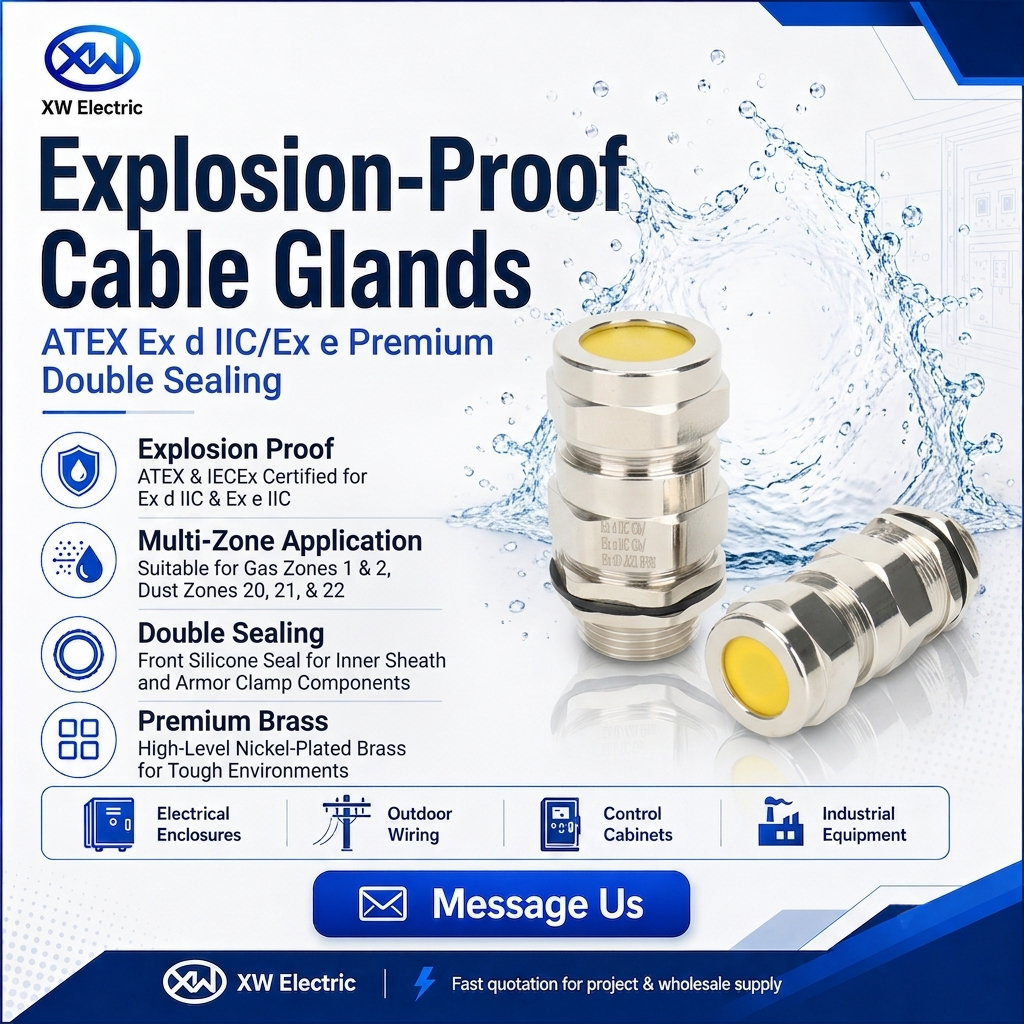
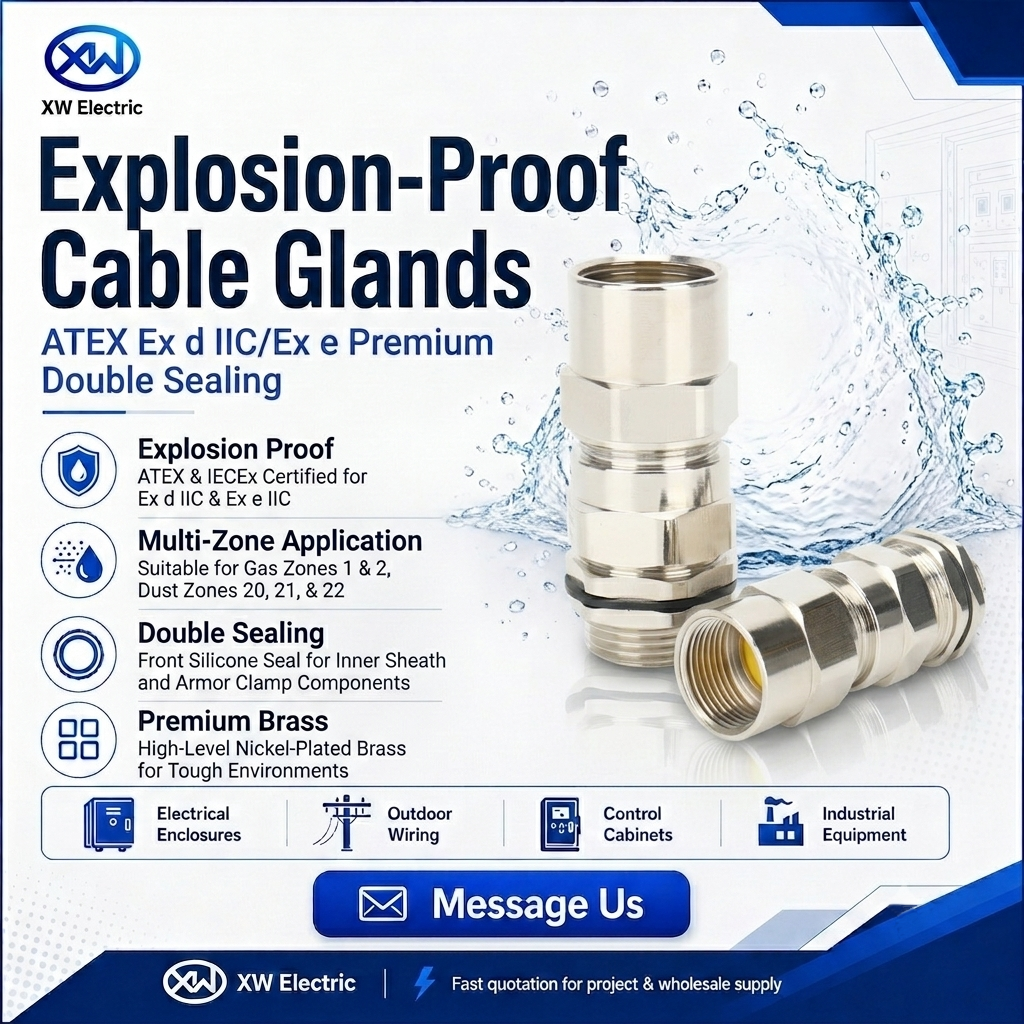
The Ex d IIC Gb flameproof cable gland designation signifies that the component features precision-machined internal flame paths. These paths allow internal gases generated during a short circuit to expand and cool safely before breaching the enclosure perimeter.
When paired with an IP68 waterproof explosion proof cable gland certification, the assembly ensures total immunity against fine particulate dust and continuous submersion under heavy hydrostatic pressure. This dual-layer defense prevents moisture from degrading internal circuitry while maintaining gas-tight security.
Nickel-Plated Brass vs. Stainless Steel Cable Glands: The Technical Showdown
Engineers frequently over-specify stainless steel, assuming it represents the only baseline for extreme environments. However, direct mechanical and metallurgical comparisons reveal that nickel-plated brass provides a compelling engineering alternative across major industrial indicators.
Salt Spray and Corrosion Resistance in Marine Environments
While raw brass tarnishes when exposed to moisture, industrial-grade electroplated nickel layers create an impermeable barrier. This coating allows nickel-plated brass components to withstand prolonged marine atmospheric exposure, salt spray, and galvanic reactions when mounted on galvanized steel or aluminum junction boxes.
Mechanical Impact Strength under Heavy Industrial Loads
Heavy industrial sites expose electrical frameworks to physical impacts, falling debris, and continuous structural vibrations. Nickel-plated brass retains its rigid structural integrity under high-torque tightening and external mechanical stress, preventing internal clamping rings from shifting or losing grip on the cable armor.
Eliminating Thread Galling Risks During Field Installation
One major operational flaw of stainless steel fittings is thread galling—a form of severe adhesive wear that cold-welds the threads during torque application. This frequently results in stripped threads and ruined enclosure ports during field installation.
The lower friction coefficient of nickel-plated brass eliminates this risk entirely, ensuring smooth installation and perfect thread engagement without field damage.
| Technical Parameter | Nickel-Plated Brass | Stainless Steel (Grade 316) | Nylon / Plastic |
| Explosion Proofing | Ex d IIC Gb / Ex e II Gb | Ex d IIC Gb / Ex e II Gb | Non-Ex d (Ex e / Ex i only) |
| Thread Galling Risk | Zero Risk (Smooth Torque) | High Risk (Cold Welding) | None |
| Salt Spray Immunity | Highly Resistant (Marine-Grade) | Extreme | High (Chemical only) |
| Extreme Temp Limit | -60°C to +100°C | -60°C to +200°C | -20°C to +60°C |
| B2B Cost Efficiency | High (Optimal Investment) | Expensive (High Premium) | Low Cost / Low Safety |
Total Cost of Ownership (TCO): Evaluating the Financial Impact
In large-scale B2B infrastructure procurement, material costs directly dictate project viability. Choosing stainless steel across an entire facility significantly inflates initial capital expenditure without providing proportional safety advantages for standard hazardous zones.
Because nickel-plated brass matches the Ex d and IP68 parameters required for hazardous zones, it delivers a massive reduction in upfront component costs. Furthermore, by eliminating installation failures tied to thread galling, it lowers field maintenance overhead and reduces downtime during routine inspections, optimizing the long-term total cost of ownership.
Selection Criteria: Matching Enclosure Specifications and Thread Standards
Sourcing the correct cable entry requires strict alignment with the specific thread tolerances of your localized enclosure configurations. Minor dimensional deviations can allow explosive flame paths to bypass the thread engagement completely, violating factory safety certifications.
Navigating Metric, PG, NPT, and G (BSPP) Threads
Global engineering frameworks demand distinct thread profiles depending on regional standards. Metric (M series) dominates European setups, NPT is standard in North American oil fields, while PG and G threads serve specialized heavy machinery.
To ensure a tight, zero-tolerance fit, it is recommended to source from manufacturers offering precision CNC-machined variations across all standard types. If you are configuring heavy-duty panel arrays, exploring a comprehensive Industrial Fittings Category can streamline component sourcing by matching diverse thread specifications under a single factory certification.
Common Pitfalls in Hazardous Area Cable Entry Procurement
B2B buyers frequently make the mistake of prioritizing low prices over certified tracking. Unverified components often carry falsified markings, lacking genuine CE, SGS, or certified Ex d test reports, which exposes operators to severe regulatory and physical liabilities.
Another vulnerability involves the quality of internal sealing components. Low-grade suppliers often use recycled elastomeric compounds that dry out, crack, or melt when subjected to industrial thermal cycles. High-specification applications require premium chloroprene or neoprene rubber seals that maintain flexibility from -60°C up to +100°C, preserving the IP68 airtight barrier over decades of continuous operation.
FAQ: Critical Questions on Explosion-Proof Cable Entry Systems
Can a nickel-plated brass explosion-proof cable gland be installed on offshore platforms?
Yes, the protective electroplated nickel layer provides robust immunity against marine salt spray and atmospheric oxidation. This makes it an ideal alternative to costly stainless steel fittings in offshore oil rigs and coastal shipping automated networks.
What is the main structural difference between Nickel-plated brass vs stainless steel cable glands?
The core technical difference lies in material friction and cost. Stainless steel offers slightly higher chemical resistance but carries a severe risk of thread galling (cold-welding) during torque execution, whereas nickel-plated brass installs smoothly, prevents thread stripping, and lowers procurement budgets significantly.
How does an Ex d IIC Gb flameproof cable gland prevent external industrial explosions?
It features tight, precision-machined internal flame paths designed to contain internal electrical sparks or explosions. As hot gases travel through these paths toward the outside, they are cooled below the ignition temperature of the external hazardous atmosphere.
Does an IP68 waterproof explosion proof cable gland protect against high-pressure washdowns?
Yes, the IP68 rating guarantees that the entry point remains completely dust-tight and resistant to continuous deep-water submersion. When equipped with high-grade neoprene seals, it easily withstands intense environmental moisture and industrial high-pressure cleaning cycles.
Why do low-grade cable glands fail during extreme seasonal temperature shifts?
Failure occurs because cheap manufacturers utilize low-grade recycled rubber for internal seals, which shrinks or cracks under freezing or scorching temperatures. High-grade industrial glands utilize specialized elastomeric compounds engineered to preserve seal integrity from -60°C to +100°C.
Strategic Conclusion: Making the Right Choice for Your Next Project
Selecting between nickel-plated brass and stainless steel should not be based on a generalized assumption of quality. For environments requiring extreme acid exposure, stainless steel remains necessary; however, for standard hazardous industrial, marine, and petrochemical infrastructure, nickel-plated brass represents the smarter engineering choice. It matches the critical Ex d IIC Gb flameproof containment and IP68 waterproofing ratings of steel while eliminating thread galling risks and slashing procurement costs.
Optimizing your electrical framework requires verified compliance and perfect component integration. Visit the Xingwei Electrical Main Site to analyze certified technical drawings and sizing sheets. For custom production requests, bulk wholesale quotes, or to claim Free Product Samples for your engineering verification, contact our support team directly at cnxwelectric@gmail.com.